

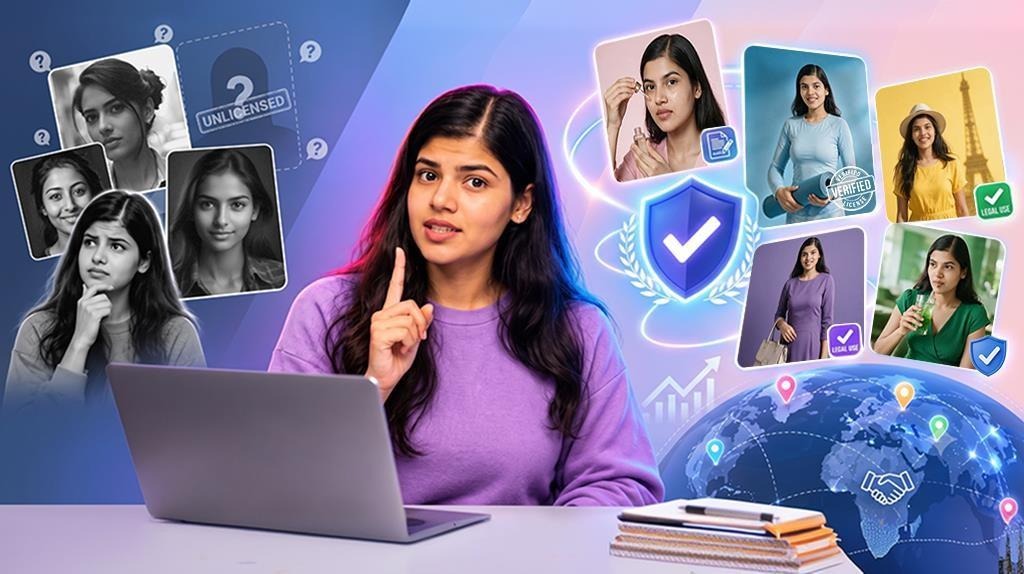
Artificial intelligence is changing how brands approach content, advertising and digital experiences. One of the most visible developments is the use of digitally created or AI-enhanced people who can appear in videos, advertisements, social media content and other brand assets. However, as this technology becomes more accessible, questions around consent, identity, usage rights and authenticity are becoming increasingly important.
This has led to growing interest in licensed AI talent. Rather than generating a digital person without clear ownership or permission, licensed talent provides brands with a more structured way to use AI-enabled identities for creative projects.
What is Licensed AI Talent?
Licensed AI talent refers to individuals whose likeness, appearance or performance can be used for approved AI-enabled content under defined permissions and usage terms.
Depending on the arrangement, a talent’s digital representation may be used to create content without requiring the individual to be physically present for every production.
The concept can apply to different types of creative professionals, including models, performers, presenters and actors. The important distinction is that the use of their identity or likeness is governed by an agreed licensing arrangement.
This gives brands greater clarity around how a digital representation can be created, where it can appear and how it can be used.
How Does It Differ from Generic AI-Generated People?
Not every AI-generated person is a licensed talent. Generative AI can create fictional faces from prompts, but the resulting identity may not have the same connection to a real professional or a defined usage agreement.
With licensed AI talents, brands can work with talent whose participation and permissions have been established for specific AI applications. This can be particularly relevant when a campaign needs a consistent digital identity across multiple pieces of content.
The distinction also matters from a responsibility perspective. Brands need to consider whether they have appropriate rights to use a person’s likeness, particularly when content is being created for commercial purposes.
Why Are Brands Exploring Licensed AI Talent?
One reason is scalability. Traditional production may require a person to be available for every shoot, location, or content variation. An authorised digital representation can potentially support multiple creative applications from an agreed talent asset.
For example, brands may use Top licensed AI actors for advertising videos, product explainers, social media content, training materials or multilingual campaigns. A digital representation can be adapted for different scripts, formats, or markets while maintaining a consistent appearance.
This can be particularly useful for brands that need frequent content updates or multiple versions of the same campaign.
Supporting More Flexible Content Production
Modern brands often need content in different formats and languages. A single campaign may require short-form videos, digital advertisements, product content, and localised versions for different audiences.
AI-enabled talent can support these requirements by allowing brands to develop content around a consistent digital identity. This does not eliminate the need for creative direction. Instead, it gives production teams another option when planning content that needs to be repeated, adapted, or scaled.
AI actors can therefore become part of a wider content workflow rather than being treated as a replacement for conventional performers in every situation.
Consent and Licensing Are Essential
The most important consideration is the permission behind the digital representation. Brands should understand exactly what they are licensing, how the talent’s likeness can be used, which platforms are covered and how long the rights remain valid.
Clear agreements can also establish restrictions around certain industries, types of messaging, geographic markets or campaign formats. These details help protect both brands and talent while establishing expectations before production begins.
As AI becomes more integrated into commercial content, responsible use of likeness is likely to become an increasingly important part of production planning.
Finding Licensed AI Talent
Brands exploring AI-enabled campaigns may need access to professionals who are comfortable participating in new production formats. An AI talent marketplace can provide a way to discover suitable talent and explore profiles based on project requirements.
Talentrack enables businesses to discover and connect with creative professionals and emerging Licensed AI-Talent for different content and production needs. This can help brands explore AI-enabled creative options while considering the talent, production and campaign requirements of each project.
What Should Brands Consider Before Using Licensed AI Talent?
Before starting a project, brands should establish the intended use of the digital talent, campaign duration, distribution channels and required content formats. They should also clarify licensing terms, approval processes and any restrictions associated with the talent.
Creative suitability matters too. A digital identity should fit the campaign’s audience, tone and visual direction. Brands should consider whether using AI-enabled talent genuinely improves the content or solves a specific production challenge.
The Future of AI-Enabled Talent
Licensed AI talent represents a developing area where technology and creative talent increasingly overlap. As brands look for more scalable ways to produce content, authorised digital representations could become useful across advertising, entertainment, ecommerce and digital communication.
However, technology alone does not determine whether an AI-enabled campaign works. Creative direction, responsible licensing, and audience relevance remain essential.
Conclusion
Licensed AI talent gives brands another way to approach scalable content production while establishing clearer boundaries around the use of digital likenesses. By combining defined permissions with AI-enabled workflows, businesses can explore new creative formats without overlooking the role of human talent.
As the technology develops, brands that approach AI-enabled talent with clear licensing, creative purpose and responsible usage will be better positioned to make the most of its potential.
