

Check official terms: Currency policies, exchange mechanisms, and digital RMB details change regularly. Verify current information with official sources such as the People’s Bank of China (PBoC) and MAS before making financial decisions.
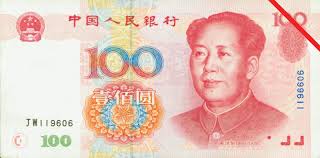
The renminbi is China’s official currency and one of the most closely watched currencies in global finance. As China’s economy has grown and its cross-border trade has expanded, the renminbi has become increasingly relevant to businesses, investors, and financial institutions worldwide — including in Singapore.
Quick Summary
- What it is: The renminbi (RMB) is the official currency of the People’s Republic of China, issued by the People’s Bank of China (PBoC).
- Name distinction: “Renminbi” refers to the currency itself; “yuan” (CNY) is the unit of denomination — like “sterling” vs “pound.”
- Two forms: CNY is the onshore version traded within mainland China; CNH is the offshore version traded freely outside China (e.g. in Hong Kong and Singapore).
- Digital form: China began e-CNY trials in 2019. From January 1, 2026, e-CNY became interest-bearing and transitioned to a full operational framework — having processed over 3.4 billion transactions worth approximately 16.7 trillion yuan (~US$2.3 trillion) by late 2025. (PBoC/Reuters, January 2026)
- Global role: RMB holds a 10.92% weight in the IMF’s Special Drawing Rights (SDR) basket, the fifth currency alongside USD, EUR, GBP, and JPY. (IMF, 2016 — as of April 2026)
- Global payments: In January 2026, RMB ranked 5th in global payments with a 3.13% share. (SWIFT RMB Tracker, February 2026)
- Singapore’s role: In December 2025, DBS was appointed as Singapore’s second RMB clearing bank by the PBoC, after ICBC Singapore. (Reuters, December 2025)
“The renminbi’s journey from a domestic currency to a key player in global finance reflects China’s broader economic transformation.” — DBS Corporate Insights
| Definition: What Is the Renminbi?Definition: The renminbi (RMB) is the official legal tender of the People’s Republic of China, issued and regulated by the People’s Bank of China (PBoC).Also known as: Yuan (CNY) — the unit of account; the two terms are often used interchangeably in everyday usage, though they are technically distinct.Key characteristics:Renminbi means “people’s currency” in MandarinYuan is the basic unit; 1 yuan = 10 jiao = 100 fenCNY = onshore yuan, traded within mainland China under PBoC controlsCNH = offshore yuan, traded freely in Hong Kong, Singapore, and other financial centrese-CNY = digital renminbi, China’s central bank digital currency (CBDC), operational from January 1, 2026What it is not: The renminbi is not fully freely convertible like the USD or EUR. Capital controls still govern how CNY moves across China’s borders, which is why the offshore CNH exists as a separate, more freely tradeable form. |
Why the Renminbi Matters
The renminbi matters because China is the world’s second-largest economy and its largest trading nation by merchandise trade volume. As Chinese trade and investment flows have grown, so has demand to settle transactions in RMB rather than converting through USD. In January 2026, RMB ranked 5th globally in payments with a 3.13% share, up from 6th in December 2025. (SWIFT RMB Tracker, February 2026)
Best used when:
- Your business trades directly with Chinese suppliers or buyers
- You want to price and settle cross-border deals in RMB to reduce USD conversion costs
- You are managing FX exposure to CNH in an offshore financial centre like Singapore
Not ideal when:
- Full capital account flexibility is required — CNY remains subject to PBoC controls
- You need a freely floating currency benchmark for pricing
For businesses and institutions that want to understand the renminbi‘s growing role in global trade, payments, and digital currency innovation, DBS’s analysis on the rise and digitisation of the renminbi provides a useful institutional perspective.
How the Renminbi Works
Concept 1: Onshore vs Offshore RMB
What it is: The split between CNY and CNH reflects China’s managed approach to currency internationalisation.
How it works:
- Input: A business outside mainland China wants to pay a Chinese supplier in RMB
- Process: It buys CNH in the offshore market (e.g. Singapore or Hong Kong), which trades at a rate determined by market forces
- Output: Payment is settled in RMB without going through China’s capital controls
Key note: CNY and CNH can trade at different rates at any given time due to differing supply and demand dynamics.
Concept 2: RMB in Global Trade Settlement
What it is: The increasing use of RMB — instead of USD — to invoice and settle international trade.
How it works:
- Input: Chinese exporters or importers agree to price a transaction in RMB
- Process: Payment flows through RMB clearing banks in offshore hubs such as Singapore, Hong Kong, and London
- Output: Trade is settled in RMB, reducing exposure to USD exchange rate movements
Key note: DBS was appointed Singapore’s second RMB clearing bank by the PBoC in December 2025, after ICBC Singapore. (Reuters, December 2025)
Concept 3: The Digital Renminbi (e-CNY)
What it is: China’s central bank digital currency — a digital form of the renminbi issued directly by the PBoC.
How it works:
- Input: A user loads e-CNY into a digital wallet via a participating Chinese bank
- Process: Payments settle instantly without requiring a bank account at point of transaction
- Output: A fully traceable, PBoC-issued digital payment, usable for retail, government payments, and cross-border pilots
Key note: By late 2025, e-CNY had processed over 3.4 billion transactions worth ~16.7 trillion yuan (~US$2.3 trillion). From January 1, 2026, it became interest-bearing and moved to a full operational framework. (PBoC/Reuters, January 2026) Cross-border use is being tested through Project mBridge, which processed $55.49 billion across 4,000+ transactions — with e-CNY accounting for approximately 95% of settlement volume. (Reuters, January 2026)
Examples of the Renminbi in Practice
- Scenario: A Singapore trading company imports goods from a Shenzhen manufacturer. Instead of paying in USD, it buys CNH via its Singapore bank and pays directly in RMB — reducing one conversion step and locking in a cleaner FX rate.
- Scenario: A Singapore investor holds CNH deposits at a local bank, earning interest on offshore yuan while maintaining liquidity outside mainland China’s capital controls.
- Scenario: A multinational uses e-CNY through Project mBridge to settle a cross-border payment with a Chinese partner instantly, bypassing correspondent banking delays. (Reuters, January 2026)
Common Misconceptions
- Myth: Renminbi and yuan mean the same thing.
Reality: Renminbi is the name of the currency; yuan is the unit of measurement — similar to “sterling” (currency) vs “pound” (unit) in the UK.
- Myth: CNY and CNH are interchangeable.
Reality: CNY is onshore and subject to PBoC capital controls. CNH trades freely offshore and can carry a different exchange rate.
- Myth: The RMB is already fully internationalised.
Reality: RMB is internationalising — it holds a 10.92% SDR weight and ranked 5th in global payments in January 2026 — but CNY capital controls remain in place. (IMF; SWIFT, 2026)
- Myth: The digital renminbi (e-CNY) is a cryptocurrency.
Reality: The e-CNY is a centrally issued CBDC. It is government-controlled, not decentralised, and does not use a public blockchain.
FAQs
What is the difference between renminbi and yuan?
Renminbi is the official name of China’s currency; yuan is its basic unit of denomination. In everyday pricing, “yuan” is used for amounts, while “renminbi” refers to the currency itself.
What is CNH?
CNH is the offshore version of the Chinese yuan, traded freely outside mainland China — including in Singapore and Hong Kong. It differs from onshore CNY, which is subject to PBoC capital controls.
Why does Singapore matter for RMB?
Singapore is a key offshore RMB hub. In December 2025, DBS was appointed as Singapore’s second RMB clearing bank by the PBoC, reinforcing the city-state’s role in regional RMB trade settlement. (Reuters, December 2025)
What is the e-CNY?
The e-CNY is China’s CBDC, issued directly by the PBoC. It became interest-bearing and entered full operational use from January 1, 2026, having processed over 3.4 billion transactions worth ~US$2.3 trillion by late 2025. (PBoC/Reuters, January 2026)
Is RMB a freely convertible currency?
Not fully. Offshore CNH trades freely, but onshore CNY remains subject to capital controls. Full convertibility is a stated long-term policy direction of the PBoC but has not yet been implemented.
References
- DBS Corporate Insights. (2026). The Rise and Digitisation of the Renminbi. https://www.dbs.com.sg/corporate/insights/the-rise-and-digitisation-of-the-renminbi
- SWIFT. (February 2026). RMB Tracker — January 2026 data. https://www.swift.com/sites/default/files/files/rmb-tracker_january-2026.pdf
- Reuters. (December 15, 2025). DBS appointed as Singapore’s second renminbi clearing bank. https://www.reuters.com/business/finance/dbs-appointed-singapores-second-renminbi-clearing-bank-2025-12-15/
- Reuters. (January 16, 2026). China-led cross-border digital currency platform sees surge. https://www.reuters.com/world/asia-pacific/china-led-cross-border-digital-currency-platform-sees-surge-2026-01-16/
- IMF. (2016). RMB included in SDR basket at 10.92% weight. https://www.imf.org
Statrys. (March 2026). CNY vs CNH vs RMB: Key differences. https://statrys.com/blog/cnh-vs-cny-differences-chinese-renminbi