

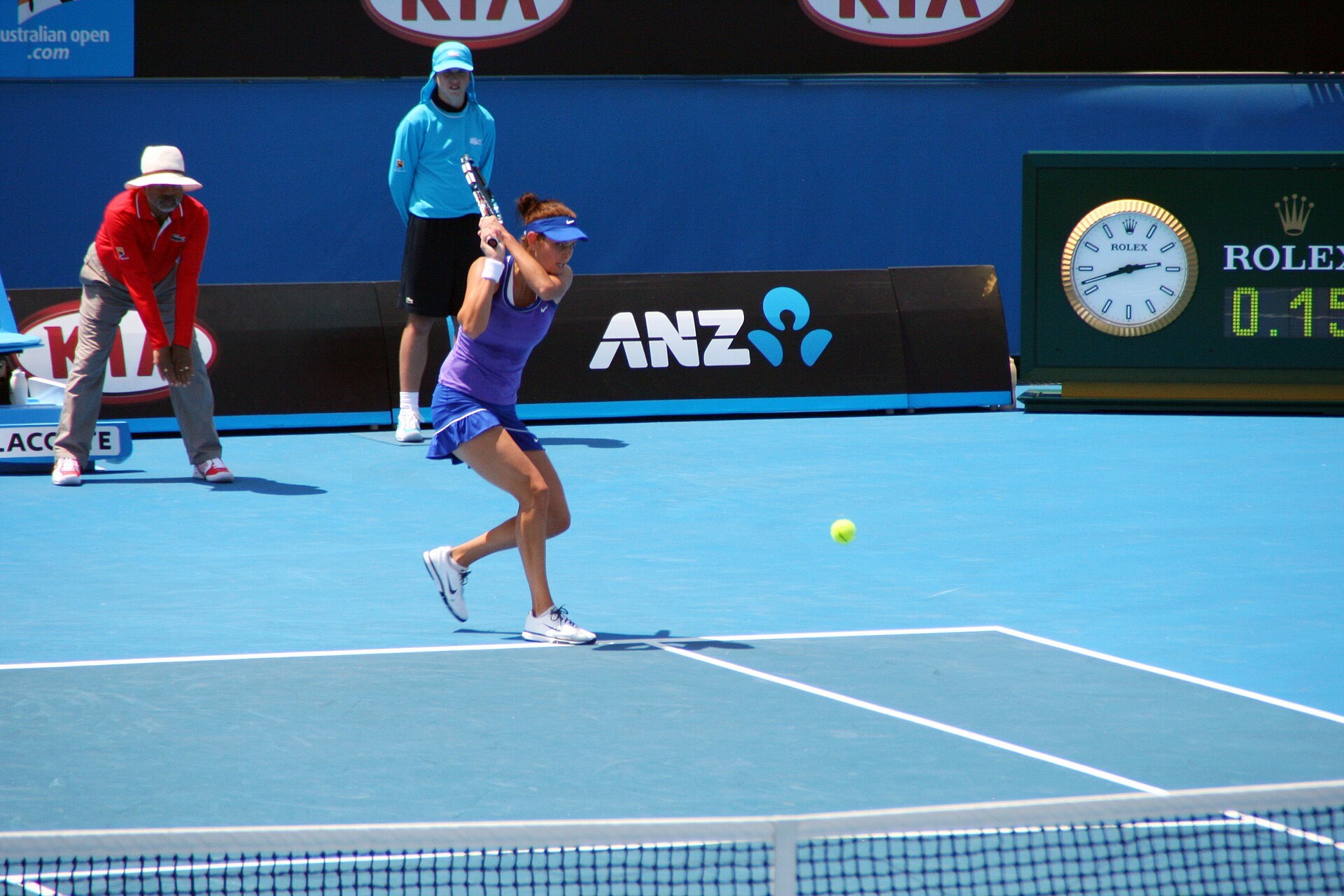
Tennis has a way of introducing its future all at once: a deep run, a televised upset, a week of highlights — and suddenly everyone is searching the same name. That name this week is Talia Gibson. The Australian’s results have propelled her into the sport’s shop window, and our blog’s sports team went looking for the player behind the trend: the junior background, the style of play, the people guiding her, and the twelve months that will decide whether this is a moment or a career.
Built the hard way
There are no shortcuts to a professional ranking, and Gibson’s reflects the standard apprenticeship: years of ITF events in far-flung cities, qualifying rounds won at dawn, main-draw wildcards at home events converted into genuine scalps. Australian tennis has a well-trodden route for its prospects — the summer swing through Brisbane, Adelaide and Melbourne offers main-draw exposure most players must fight months to earn. Her use of it has been ruthlessly efficient: wins against established names, competitive losses that shortened each time, and a ranking graph that points in one direction. The trajectory is visible in the tour data published by the WTA, where her recent seasons show the pattern of a player who has stopped knocking on the door and started walking through it.
The game itself
Scouts describe first-strike tennis with a modern twist: a reliable serve that wins free points, a forehand struck early and hard, and the willingness to finish points rather than wait for errors. It is the template of contemporary champions, and it comes with the template’s known homework — the return game, the backhand under pressure, and shot selection when the easy winner is not on. Her team has clearly prioritised the transitional moments: serve-plus-one patterns, first-strike returns, and the fitness to defend when the aggression is not landing. That balance — attack without recklessness — is the skill that elevates hitters into contenders.
Why the timing is perfect
Australian women’s tennis is in a handover phase, and handovers create vacuums that the ambitious fill. National selectors, sponsors and broadcasters are all scanning for the next standard-bearer, and attention in Australian sport follows performance with unusual speed. Gibson’s emergence lands in a window where opportunity is at maximum — home-event wildcards, media coverage, crowd adoption. Trending status, in this context, is not just vanity: it converts into main-draw invitations and sponsorship that fund the expensive year ahead.
The obstacles ahead
The tour’s next test is the least glamorous: defending points. Once a player breaks through, every ranking point must be re-won the following year, and the calendar becomes a management puzzle of surfaces, travel and rest. Opponents now scout her thoroughly, targeting the patterns her first surge disguised. Physical durability across a 30-week season separates the one-year wonders from the fixtures; coaches at this level speak of the gym as the second court. How she handles a first bad month — every player gets one — will tell more than the breakthrough itself.
Measuring the next twelve months
The concrete targets are clear: consolidate inside the top 100, earn direct entry to every Grand Slam, reach a first tour-level final. Each milestone unlocks the next layer of career infrastructure — direct entry saves the body, finals pay the team, and ranking stability brings the scheduling control that makes deep runs repeatable. Progress is tracked week by week on draws and rankings sites such as Tennis.com, where her followers will watch the numbers as closely as the highlights.
The bottom line
Talia Gibson is trending because the substance arrived before the spotlight: a real game, real results, a real trajectory. Tennis history is littered with weeks like this one — the difference between a trend and a career is what happens in the months when nobody is searching. All the evidence suggests she is built for the months ahead.
