

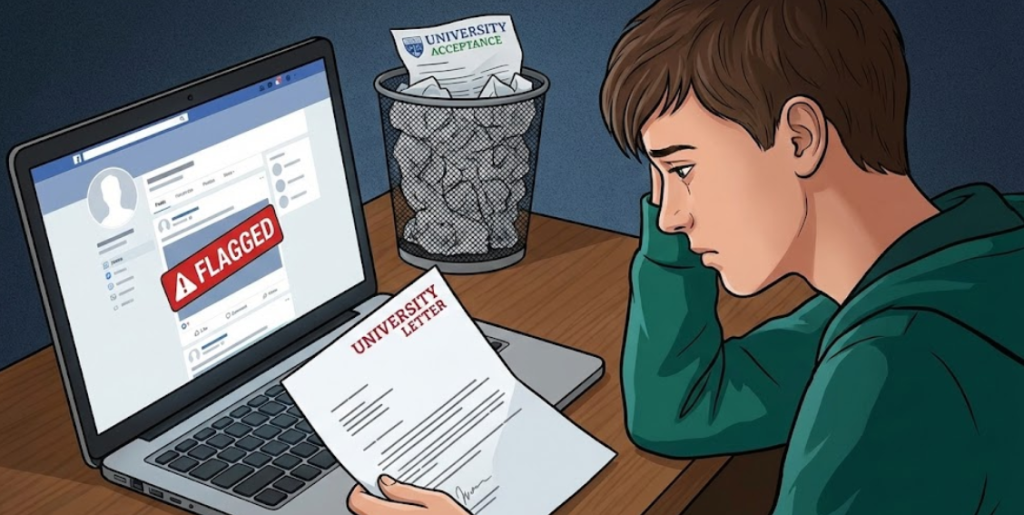
It was a Tuesday morning when the letter arrived. I remember my neighbor’s kid—let’s call him Leo—sprinting to the mailbox, his heart practically beating out of his chest. He had the grades, the varsity jacket, and the volunteer hours that would make a saint look lazy. He ripped open the envelope from his dream university, expecting confetti and congratulations. Instead, he got a polite but firm rejection.
Why? It wasn’t his GPA. It was a thread of “edgy” jokes he posted on Twitter three years ago.
This isn’t just a horror story I tell at dinner parties to scare teenagers; it is the new reality of higher education. The admissions office is no longer just looking at transcripts; they are looking at timelines. This brings us to the question that every parent, student, and educator needs to answer right now: What is social media vetting, and why is it suddenly the gatekeeper to your future?
The Digital Detective: Unpacking the Concept
So, let’s cut through the jargon. What is social media vetting? In simple terms, it is the process of analyzing a person’s public digital footprint to assess their character, integrity, and potential risk. Think of it as a background check, but instead of looking for criminal records, it looks for behavioral red flags.
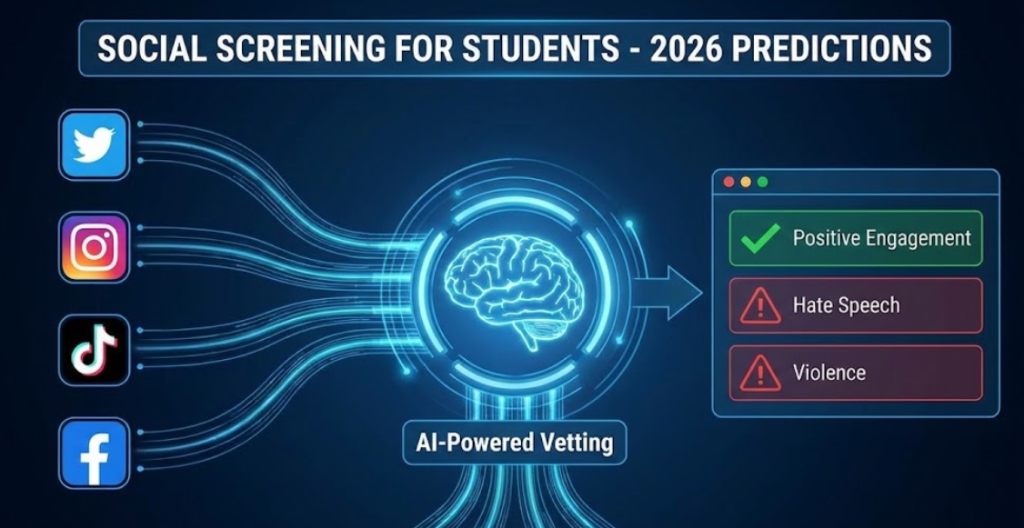
But here is the kicker: we aren’t talking about a bored admissions officer doom-scrolling through your Instagram at 2 AM. That is the old way. Today, institutions use sophisticated online reputation checks powered by Artificial Intelligence. These tools can scan thousands of posts in seconds, flagging hate speech, violence, or illegal substances while—crucially—ignoring protected traits like your religion or political affiliation.
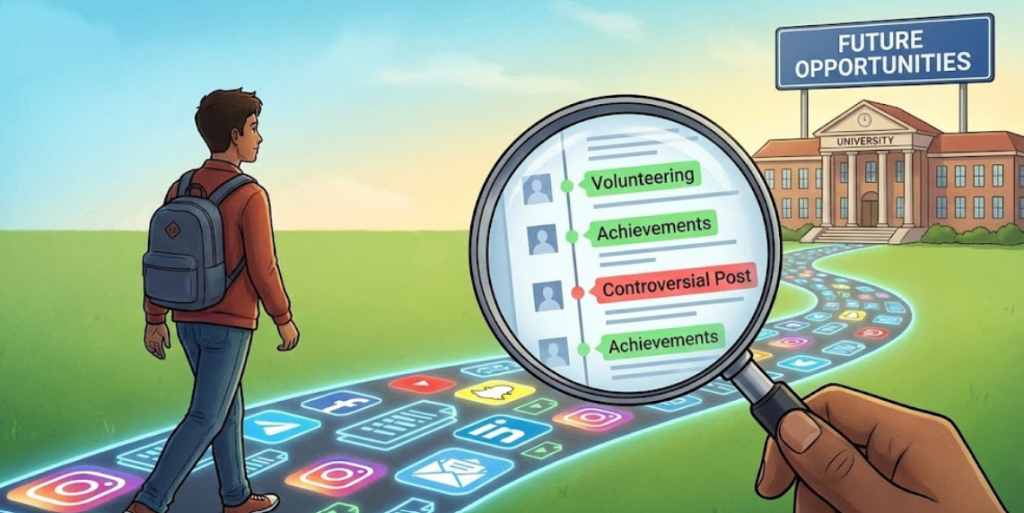
I often tell people, “The internet is written in ink, not pencil.” Technology has simply given institutions a magnifying glass to read it.
Why Universities Are Ramping Up Social Screening for Students
You might be thinking, “Is this fair?” Honest answer? It doesn’t matter if it’s fair; it matters that it’s happening. Social screening for students has exploded in popularity for one simple reason: brand protection.
Universities are essentially small cities. They have their own culture, their own laws, and their own reputation to uphold. If they admit a student who has a history of online harassment, they aren’t just bringing in a student; they are bringing in a liability. I’ve spoken to admissions directors who are terrified of the next PR nightmare. They know that one viral video of a student engaging in hate speech can tarnish a century-old reputation overnight.
And it’s not just about getting in. It’s about staying in. We are seeing a massive spike in social screening for students regarding visas. If you are an international student hoping for an F-1 visa, know this: border agents are looking at your digital life to verify your intent. A joke about “never leaving the US” can be interpreted as immigration fraud intent.
The Future: Algorithms That Predict Your Success
If you think today’s vetting is intense, wait until you see what’s coming in 2026. The industry is shifting from “risk detection” to “predictive analytics.”
Imagine an AI that doesn’t just look for bad stuff but actually looks for the good stuff. Future digital background checks might analyze your LinkedIn activity or your design portfolio to predict your future success as an alumnus. It’s a brave new world where your online presence isn’t just a minefield; it’s a goldmine if you manage it right.
However, we also have to talk about the elephant in the room: Deepfakes. As Generative AI gets better, social screening for students will need to evolve to protect candidates from fake content. I predict that within two years, “proving you didn’t post that” will be a standard part of the appeals process.
Strategic Best Practices: Don’t Delete, Just Curate
So, what do you do? Panic? Delete your accounts and move to a cabin in the woods? Please don’t.
If you are a student (or raising one), you need to treat your social media like a digital resume. Here is my golden rule, passed down from my grandmother who didn’t even own a computer: “If you wouldn’t want it on a billboard in Times Square, don’t put it on the internet.”
For universities, the advice is different. Be transparent. Don’t let social screening for students be a secret shadow process. Put it in your handbook. Tell applicants, “We look at who you are online because we care about who we bring onto our campus.”
The Bottom Line
We live in a world where your character is content. Understanding what is social media vetting isn’t just about avoiding trouble; it’s about taking ownership of your narrative. The digital border is real, and it is open for business. Make sure your passport is stamped with integrity.
