

Introduction
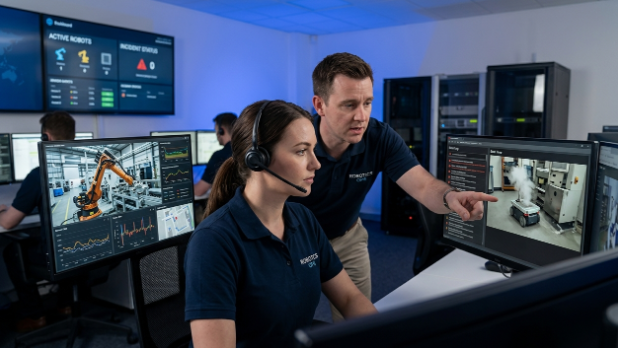
The landscape of modern industry is undergoing a paradigm shift, moving from static automation toward dynamic human-robot teaming. As we integrate increasingly complex robotic systems into logistics, security, and healthcare, the reliance on an autonomous-only approach has proven insufficient for unpredictable environments. Today, the "intelligent anchor" of any successful fleet is the remote robot operator. By balancing Artificial intelligence with human intuition, these professionals facilitate a sophisticated form of human-robot collaboration, ensuring that deployments ranging from indoor logistics to field patrols remain resilient, compliant, and safe. This article explores the evolving responsibilities of remote operators who act as the essential bridge between high-level autonomous robots and the mission-critical objectives of an organization.
Why Remote Robot Operators Are Essential
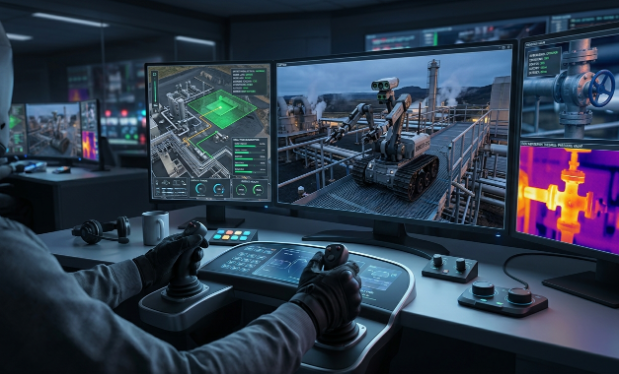
While autonomous systems represent a marvel of engineering, they operate within finite parameters. Real-world environments are rife with "edge case" situations where the programmed logic fails to interpret environmental complexity accurately. Remote robot operators are essential because they provide the cognitive flexibility that an operating system alone cannot replicate.
By maintaining high-level situational awareness, operators perform critical supervision tasks that ensure the entire robot system remains productive. They are not merely observers; they are active managers who maintain robust mental models of the robot’s environment. This human-in-the-loop architecture provides a vital safety net, allowing businesses to leverage the speed of automation while retaining the executive decision-making capabilities required for nuanced, high-stakes tasks.
1. Navigation Support
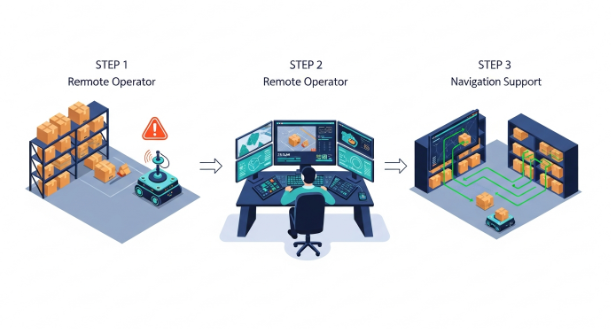
How remote operators solve tricky navigation problems when autonomous systems face unexpected obstacles.
Getting from one place to another isn't always easy. Even with advanced navigation systems, robots often run into obstacles or surprises. Operators help guide the unit through busy or tricky areas by looking at maps and sensor information. The operator keeps the robot on track by steering it around spills or temporary obstacles, so there's less need for physical resets.
2. Real-Time Monitoring
Modern fleet management requires more than simple tracking; it demands proactive oversight. Operators use a specialized operator interface to keep a pulse on the Control system and vital health metrics of each unit. We keep collecting data all the time by checking how well the sensors work, how much battery is left, and if they're connected. Operators keep the fleet running smoothly by spotting performance issues before they cause problems, making sure the robot controller works at its best.
3. Incident Response
Incident response represents the intersection of physical safety and digital integrity. If a robot hits something or notices something strange, the operator needs to start the incident response plan. It's not just about physical actions; it also means watching over IT systems for any signs of
digital messing around. Because robots are networked assets, operators are the first line of defense in identifying potential breaches, ensuring that personal information and sensitive operational data are protected according to established data protection standards.
4. Remote Control and Intervention
There are moments when high-level shared autonomy must yield to manual intervention. Using an Enabling Device or a Teach pendant, operators can take direct command to navigate the robot out of a precarious position. This capability is crucial for maintaining physical safety in dynamic areas. By skillfully controlling the robot's movements or adjusting its main point, the operator makes sure the robot does its job safely without causing damage to itself or the area around it.
5. Data Collection and System Improvement
Operators are the primary source of feedback for continuous improvement. They collect detailed data on how the robot acts in different situations to improve AI behavior analysis. It's not just about error logs; it's also about showing robot makers and users how the robot works with people. We collect and use data often to ensure the technology gets better, smarter, and more user-friendly.
The Role of Teleoperation in Supporting Operators
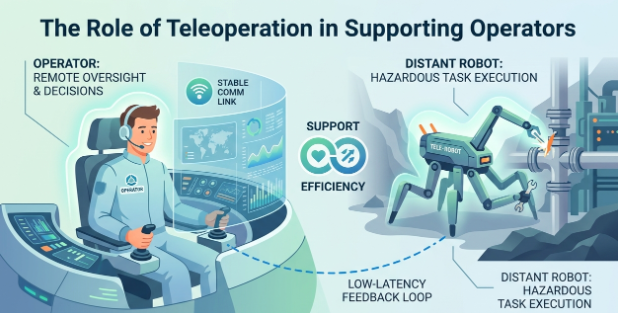
Teleoperation platforms are the foundation of modern remote management. These platforms make it easy to switch between letting the robots work on their own and taking control when needed.
Improved Reliability
By leveraging cyber threat intelligence, operators can anticipate network fluctuations or communication gaps, ensuring that the robots maintain a consistent connection to the fleet management system.
Reduced Downtime
If you quickly fix a small sensor problem from a distance, the whole production line keeps running, which makes the fleet more profitable.
Enhanced Safety
By following the Hierarchy of Controls, operators utilize Safety-rated soft-axis limits and other risk reduction measures to ensure that all operations remain compliant with ANSI/RIA R15.06-2012 standards, prioritizing human-robot safety above all else.
Scalable Operations
With an intuitive interface, a single expert can manage a much larger fleet than was previously possible, using multi-robot fleet communications to coordinate complex mission objectives across large facilities.
Better Performance
By constantly analyzing robot system performance, operators fine-tune the interactions between the machine and its environment, leading to a measurable increase in task completion rates and overall operational efficiency.
Conclusion
The modern remote robot operator is an expert manager of complex cyber-physical systems. By leveraging Robot Teleoperation, organizations can effectively manage collaborative robots on factory floors and monitor security units in public spaces with precision and control. Their role is defined by the ability to manage risk, ensure data protection, and maintain strong human-robot collaboration. By following guidelines from the National Institute of Standards and Technology and other safety standards, businesses ensure their robotic systems remain secure, reliable, and efficient. Developing skilled operators helps organizations reduce digital risks and ensures their investments in robotics are successful and scalable over time.
