

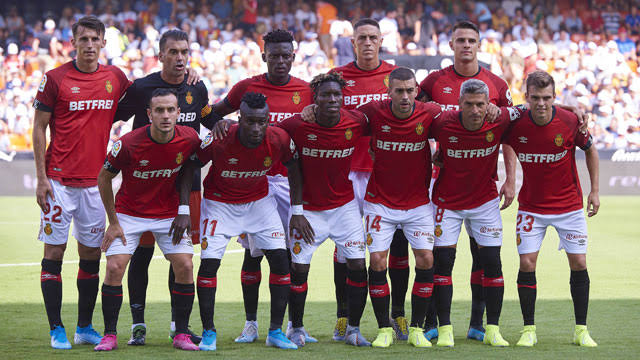
Newly promoted clubs often arrive in the top flight carrying momentum, public sympathy, and mispriced odds. In La Liga 2021/2022, Espanyol, Mallorca, and Rayo Vallecano stepped up from Segunda and immediately presented that classic dilemma: should bettors ride the optimism or position against the adjustment shock? The answer depended less on badge reputation and more on how each club translated its lower-league identity into top-flight reality.
Why Promoted Teams Create Unique Betting Conditions
Promotion magnifies uncertainty. Market models must price teams with limited recent top-flight data, while public sentiment often overvalues emotional narratives—heroic playoff wins, dominant Segunda campaigns, or returning historical names. This combination distorts early-season lines. Some promoted sides remain tactically coherent and under-respected, creating value for followers; others struggle with defensive speed, squad depth, or tactical naivety, turning them into reliable fade candidates once adjustment problems surface. Espanyol, Mallorca, and Rayo Vallecano each illustrated different points along that spectrum.
Identifying Structural Profiles of the 2021/2022 Promoted Teams
Before choosing follow or fade, you need a structural profile: how does each team actually play, and where does that style collide with La Liga’s demands? Espanyol arrived with possession-oriented tendencies and a capacity to generate regular shots, as reflected in their average shot volume and expected goals per match. Mallorca leaned more toward containment, with limited scoring power and a vulnerability to sustained pressure, ultimately conceding 63 goals over the season. Rayo Vallecano entered with a high-energy, pressing identity and produced a mid-table finish with 11 wins and a negative goal difference, highlighting volatility rather than collapse. These profiles framed where following or fading made rational sense.
When Following a Promoted Team Carried Edge
Following made sense when underlying indicators looked healthier than surface results. Espanyol, for instance, averaged roughly 1.44 xG for and 1.47 xGA per match, suggesting they created close to as much as they conceded and did not structurally resemble a relegation side. In such cases, backing them in specific contexts—home fixtures against mid-table opponents or handicap lines granting generous head starts—leveraged an underlying equilibrium that the league table alone did not fully reflect. Early stretches where Espanyol’s actual goals lagged their xG hinted at modest rebound potential, supporting cautious follow positions.
Rayo Vallecano: Home Fortress, Away Liability
Rayo’s season embodied split personality. They finished 12th with 39 goals scored and 50 conceded, but the distribution mattered. At home, Rayo delivered intense pressure, higher goal production, and competitive results; away, their aggressive structure exposed them repeatedly, inflating goals against and generating poor form sequences. From a betting perspective, this reinforced a selective strategy: follow Rayo in home fixtures when odds undervalued their high-intensity environment, but fade or avoid them away, especially when markets priced them as if their home form travelled. The home/away discrepancy made blanket loyalty or opposition irrational; context-based positioning captured the real edge.
Applying Market Reading Discipline Through UFABET
Turning these structural reads into real decisions required consistent odds observation. During 2021/2022, bettors who monitored La Liga markets through a unified sports betting service like UFABET could watch how prices evolved around Espanyol, Mallorca, and Rayo across the season. When early home performances from Rayo, for example, exceeded expectation, subsequent home lines tightened; the key was identifying when that compression overshot their true advantage, signaling time to fade rather than continue following. Likewise, shifts in handicap and total lines around Mallorca reflected growing recognition of their defensive fragility—once markets fully priced that in, automatic fades lost edge. Using ufabet เข้าสู่ระบบ’s consolidated odds and history views turned subjective impressions into measurable patterns, aligning follow/fade decisions with real-time pricing rather than memory.
Mallorca: Classic Relegation-Battle Fade with Situational Exceptions
Mallorca’s campaign illustrated a more traditional promoted profile. With 10 wins, 9 draws, and 19 losses, and a goal difference of −27 from 36 scored and 63 conceded, they profile as a team often under sustained pressure. For much of the season, fading Mallorca—particularly away to technically superior sides—was logical, as structural weaknesses in chance prevention and limited attacking ceiling made resilience unlikely over 90 minutes. However, late-season survival surges and focused home performances against similarly threatened rivals created pockets where markets overreacted to their negative reputation. In those tightly framed fixtures, taking Mallorca with a handicap at home could present contrarian value, reminding bettors that even fade candidates deserve periodic re-evaluation.
Comparing Promoted Team Profiles: Follow or Fade Tendencies
A comparative view clarifies how follow/fade logic diverged across the three clubs.
| Team | Primary Strength Profile | Key Weakness Profile | General Bias | Practical Angle |
| Espanyol | Balanced xG for/against, stable shots | Occasional defensive lapses, mid-table ceiling | Mild follow in fair odds | Target home matches vs non-elite |
| Mallorca | Isolated competitive home spells | High goals against, thin squad depth | Default fade | Back only in relegation six-pointers at home |
| Rayo Vallecano | High-intensity home displays, strong cup run | Volatile away form, exposure in transitions | Split: follow at home, fade away | Use venue-based filter |
This framing underscores that “promoted” is not a single category. Each team demanded its own tailored response, and profitable bettors resisted one-size-fits-all approaches.
H3: Mechanism for Adjusting Follow/Fade Decisions Mid-Season
Follow or fade cannot be locked pre-season and left unchanged. Mechanically, bettors should cycle through three steps every 6–8 matchdays: update xG and shot metrics, reassess home/away splits, and compare results with implied probabilities from recent odds. If a promoted team’s results suddenly outperform its underlying numbers, the edge in following may have evaporated; if results lag despite stable metrics, temporary value in backing them can reappear. This loop of data refresh and market comparison keeps decisions responsive to real evolution rather than anchored to August expectations.
Where the Promoted-Team Angle Fails
Despite their appeal, promoted teams can trap bettors in narrative. Over-focusing on them risks missing broader league shifts—injury waves among established clubs, tactical trends affecting totals, or refereeing emphasis that changes foul and card distributions. Moreover, once public and bookmakers fully internalize a promoted side’s true level, spreads and totals adjust; at that point, continuing to follow or fade solely on “promoted” status becomes dead capital. The disciplined move is to retire the angle when pricing sophistication catches up, reassigning attention to fresher inefficiencies.
Summary
Evaluating La Liga’s 2021/2022 promoted teams from a betting viewpoint required more granularity than simply asking whether to back or oppose them. Espanyol offered cautious follow potential through balanced metrics, Mallorca functioned largely as a fade with targeted exceptions, and Rayo Vallecano demanded a venue-sensitive split strategy. By pairing structural team profiles with live market observation and periodic reassessment, bettors turned “promoted team” from a lazy label into a nuanced, situational edge—one that rewarded selective commitment over blanket loyalty or opposition.