

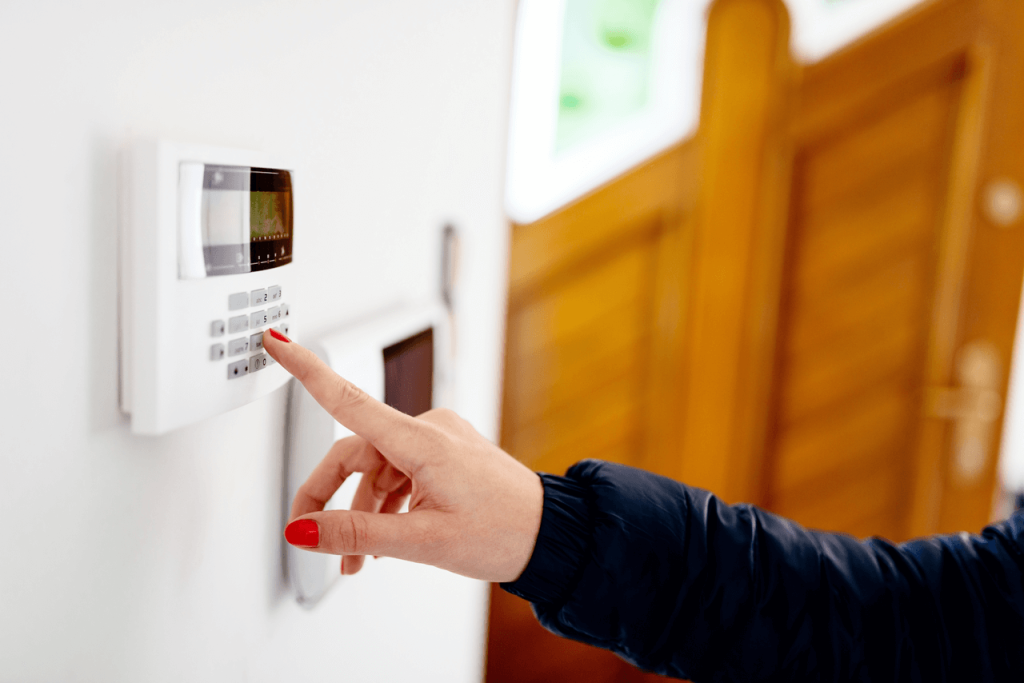
Do you remember the days when “home security” just meant a deadbolt and maybe a barking dog? We’ve come a long way since hiding a spare key under the doormat.
For years, security was passive. You locked the door and hoped for the best. If an alarm went off, it meant the bad thing was already happening. But today, the script has flipped. We aren’t just locking doors anymore; we are interacting with living, breathing ecosystems that protect our homes actively.
This shift isn’t just about cool gadgets. It’s about a fundamental change in how we think about safety—moving from simple fortification to intelligent awareness.
Understanding the Modern Ecosystem
The term “smart home” gets thrown around a lot, often in the context of asking a speaker to play music or turn on the lights. But the real power of this technology lies in security.
Modern systems are built on connectivity. It’s no longer about standalone devices working in isolation. Sensors on your windows talk to the cameras at your front door, which communicate with a central hub that you control from your pocket.
This is where Home Automation Services truly shine. They knit these disparate pieces of technology into a seamless safety net. When your smoke detector goes off, your system doesn’t just beep; it can automatically unlock the front door for firefighters, shut down your HVAC system to stop feeding the fire oxygen, and turn on all the lights to help you escape safely. That is the difference between a gadget and a solution.
Moving from Reactive to Proactive
The biggest leap forward is the shift from reactive to proactive security.
Traditional alarms are reactive. A window breaks, a siren sounds. It’s effective, but it’s often too late to prevent the damage. Smart automation changes this dynamic by using artificial intelligence (AI) to identify threats before they escalate.
Cameras can now distinguish between a stray cat, a delivery driver, and a potential intruder loitering at your gate. System algorithms learn your patterns—when you leave for work, when the kids get home—and alert you to anomalies. If the garage door is left open after 10 PM, your house sends you a nudge. If motion is detected in the backyard at 3 AM, exterior lights can flash to deter a trespasser before they even touch the doorknob.
The Human Element: Peace of Mind
Despite all the talk of AI and algorithms, the most significant benefit of smart security is deeply human: peace of mind.
Life is chaotic. We rush out the door for school drop-offs, race to meetings, and juggle a million mental tabs. The nagging doubt of “Did I lock the back door?” used to be enough to ruin a morning.
With smart automation, that anxiety evaporates. You can check your locks from your desk. You can verify your kids made it home safely from school without having to call them. You can answer the doorbell from a beach halfway across the world, giving the impression that someone is always home.
Home Automation Services aren’t just protecting property; they are protecting your mental bandwidth. They handle the vigilance so you can focus on living your life.
What the Future Holds
We are still in the early stages of what this technology can do. As Home Automation Services continue to advance, we can expect even deeper integration.
Imagine a system that integrates with local neighborhood alerts to heighten sensitivity when crime is reported nearby. Or biometric access that removes the need for keys entirely, granting access to family members based on facial recognition or fingerprints while keeping strangers out.
As 5G networks expand and AI becomes more sophisticated, these systems will become faster, more reliable, and surprisingly, more accessible. High-level security features that were once reserved for the wealthy are rapidly becoming standard for average homeowners.
A Worthy Investment
Upgrading to a smart security system is more than a tech purchase; it’s an investment in your family’s well-being. It transforms your home from a static building into a responsive guardian.
By embracing smart automation, you aren’t just installing cameras—you are installing confidence. You are taking control of your environment in a way that wasn’t possible a decade ago, ensuring that your sanctuary remains exactly that.